

How to Make Poached Eggs
Want to make a classic breakfast dish? Learning how to make poached eggs is an essential step!
Soft with a runny yolk, poached eggs are a must for eggs Benedict, avocado toast, and breakfast salads. But don’t be intimidated—poaching eggs is easier than you might think!

Why You’ll Love Poached Eggs
- Poached eggs instantly elevate any dish, and we’re not limiting it to breakfast here! They’re wonderful in grain bowls, with a good steak, or on top of creamy polenta.
- It takes just minutes, so you can have your eggs ready before the coffee is even done brewing.
- The rich, creamy texture can’t be beat! These eggs add incredible flavor to any dish.
Ingredients for this recipe
This is just an overview. For full measurements and step-by-step instructions, scroll down to the printable recipe card. It’s all there waiting for you!
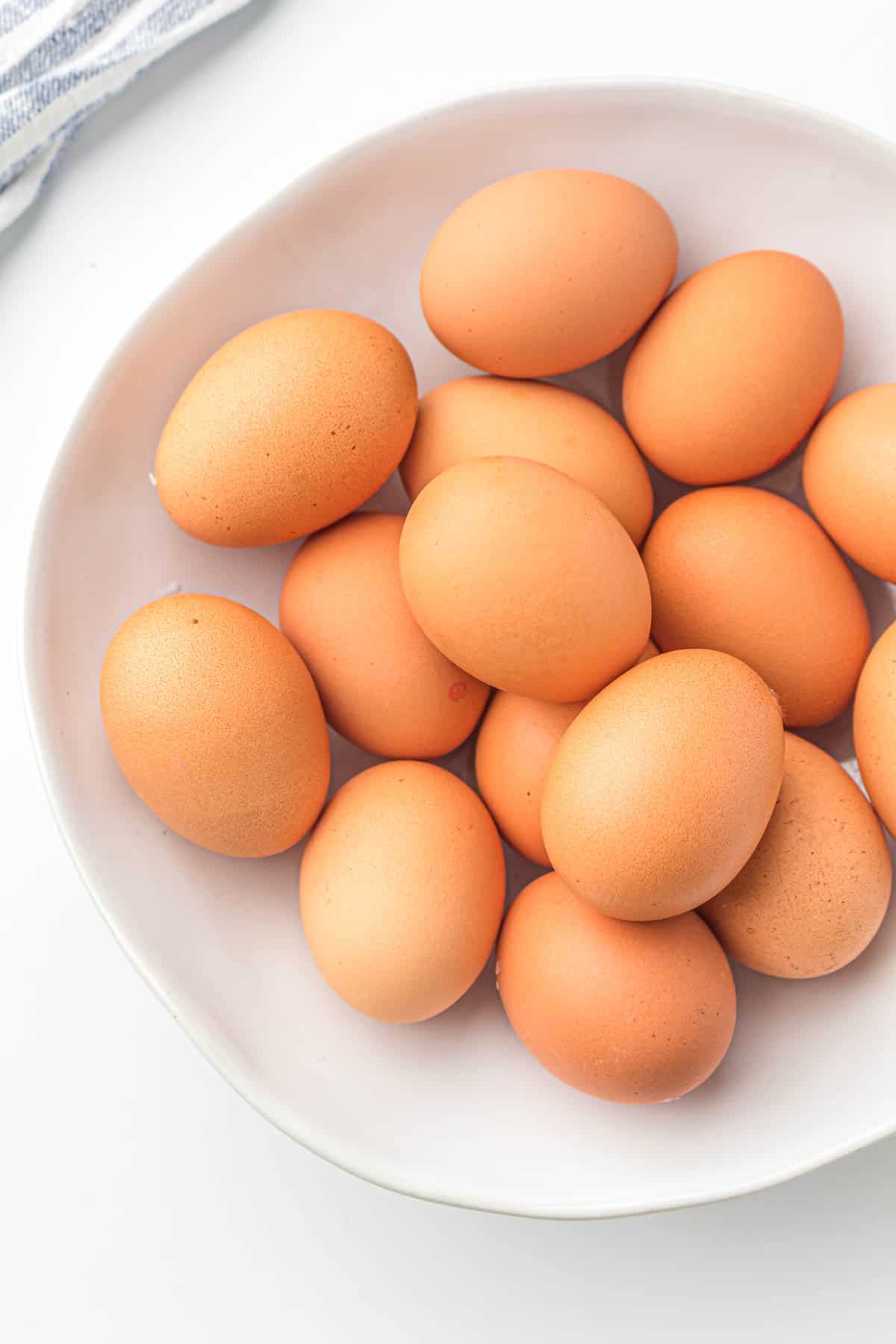
While some recipes for poached eggs don’t use vinegar, I prefer to add it. The vinegar’s acidity helps the egg whites coagulate and stay together, giving you a more whole poached egg. You won’t taste the added vinegar!
How To Poach Eggs
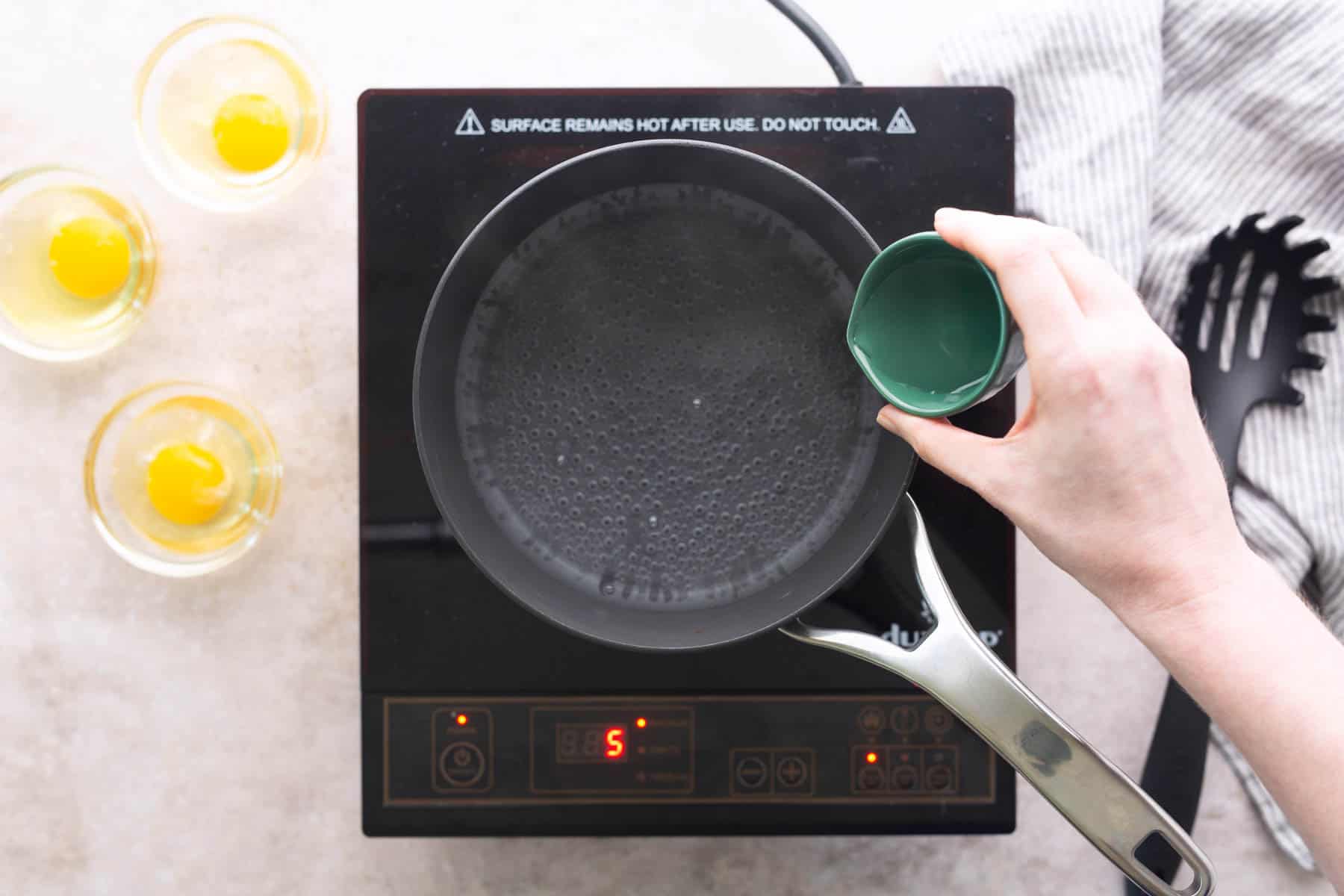
Step 1: Prepare Water
Fill a saucepan with 4 inches of water and bring it to a simmer. Make sure it is large enough to cook 2-3 eggs at a time with space for the eggs to move a little. Stir in the vinegar.
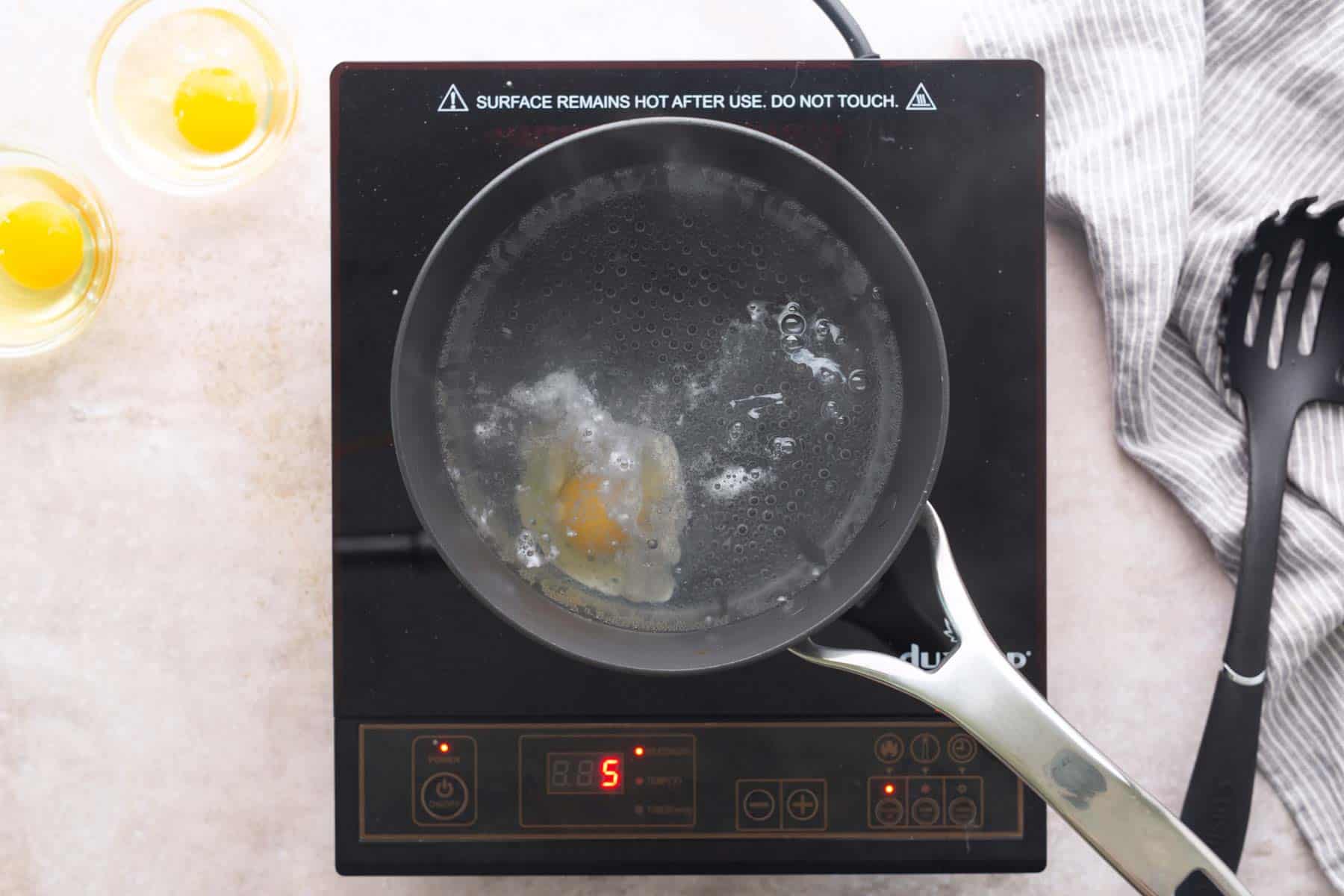
Step 2: Slide in Eggs
Crack each egg into its own small bowl. Keeping the bowl close to the surface of the water, slide 1 egg into the water. Add more eggs as they fit, but do not crowd the pan.
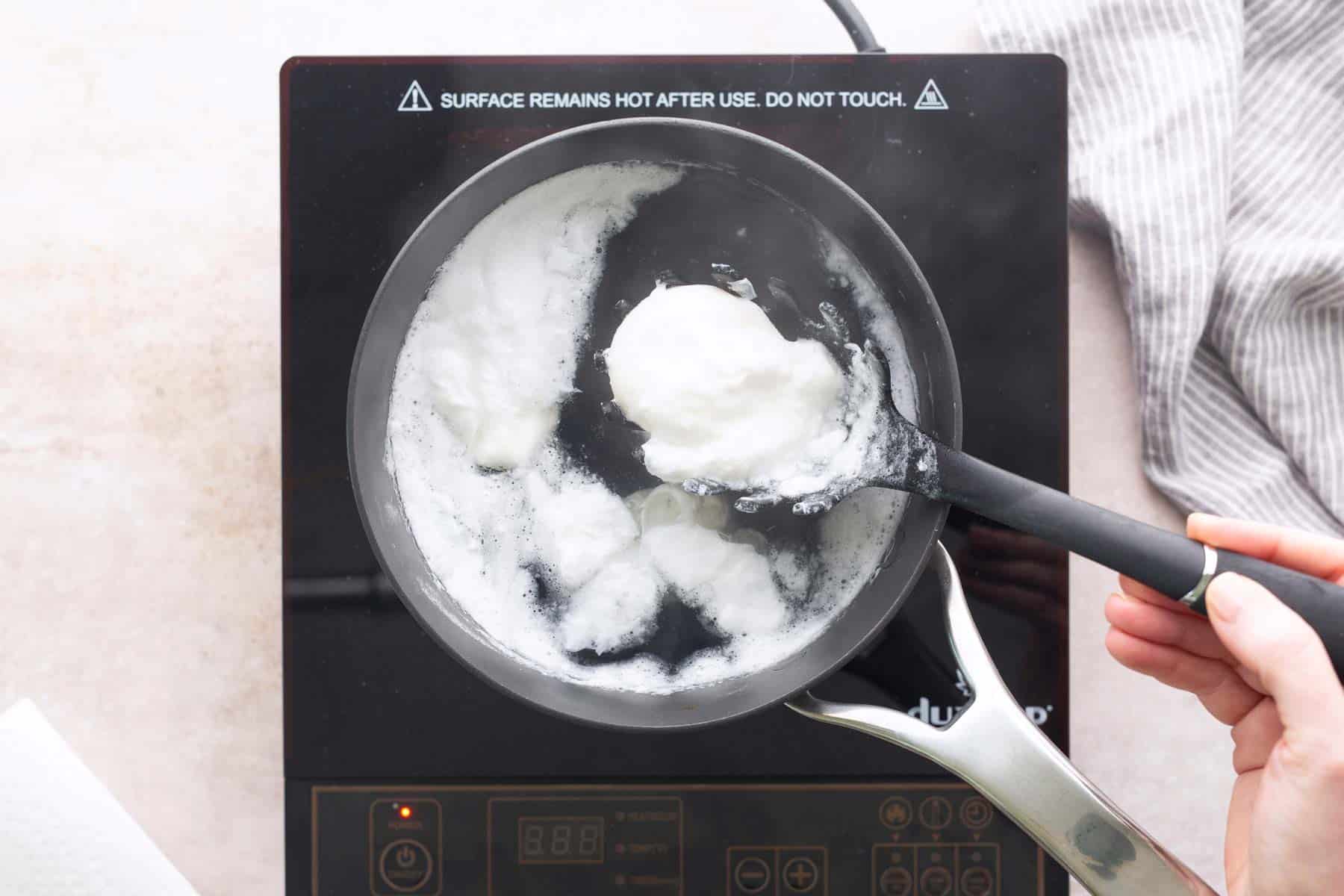
Step 3: Cook
Cook the eggs for 3-4 minutes, until the whites are set but yolks are soft. Scoop out using a slotted spoon or small fine mesh sieve.
Step 4: Drain
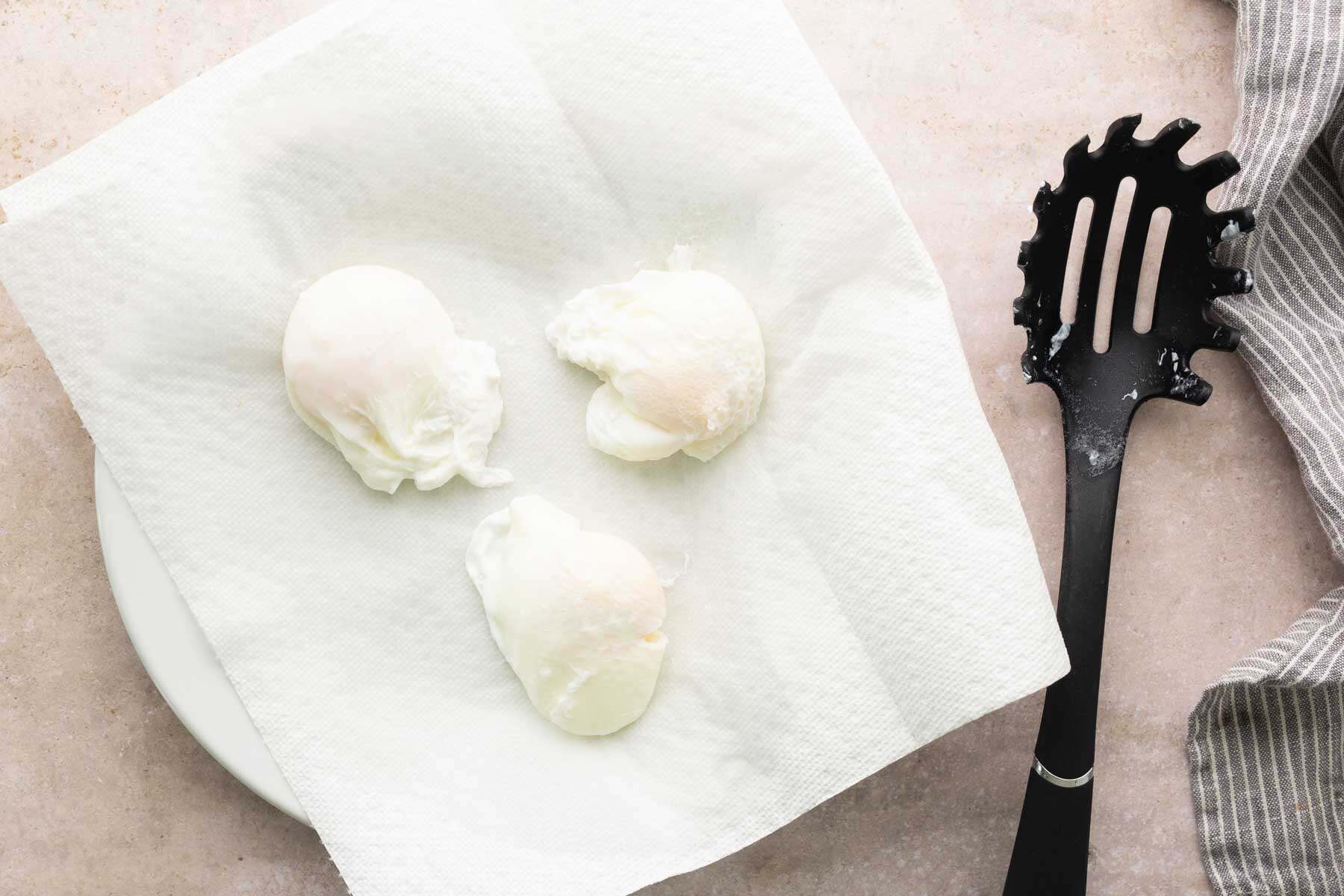
Gently lay on a paper towel-lined plate to drain excess water and blot carefully, making sure to not break the yolks. Serve as desired!
Tips & tricks
The water should be at a gently simmer, with small bubbles on the bottom of the pot. If the water is boiling too vigorously, the egg whites will not be able to set.
If you break the yolk while cracking the egg, do not use it for poaching. Save it for another recipe.
Use fresher eggs for a more-perfect shape to your poached eggs. Older eggs have looser whites, so they’re better for making hard boiled eggs instead. Fresh eggs from the farmers market are perfect for poaching eggs!
If you end up with a few wispy pieces of egg white, you can always trim it off before serving for a prettier presentation. No one has to know!
Serving suggestions
Once you learn how to make poached eggs at home, you’ll find so many ways to incorporate them into your meals!
Try them with a frisée salad, shrimp and grits, or simply plated alongside a pile of air fryer bacon. You can’t go wrong!
How to Make Poached Eggs

Ingredients
- Water, to fill pan
- 1 tablespoon distilled white vinegar
- 4 eggs
Instructions
- Fill a large saucepan with 4 inches water and bring to a gentle simmer. Stir in the white vinegar.Water, 1 tablespoon distilled white vinegar
- Crack each egg into its own small bowl. If any yolks break, set aside for another use and crack a new egg.4 eggs
- Carefully slide the eggs into the simmering water and cook for 3-4 minutes, or until the whites are set and the yolks remain soft.
- Remove the eggs with a slotted spoon and gently blot dry with paper towels, then serve as desired.

Megan Myers has been sharing her favorite recipes online for 20 years. She has worked for companies like Whole Foods Market, Texas Co-Op Power, and Good Catch Foods. Her favorite breakfast food is waffles with plenty of maple syrup.